
Echoes of Delhi: A Glimpse into the 19th-Century Qutb Minar
By Ajaz ·
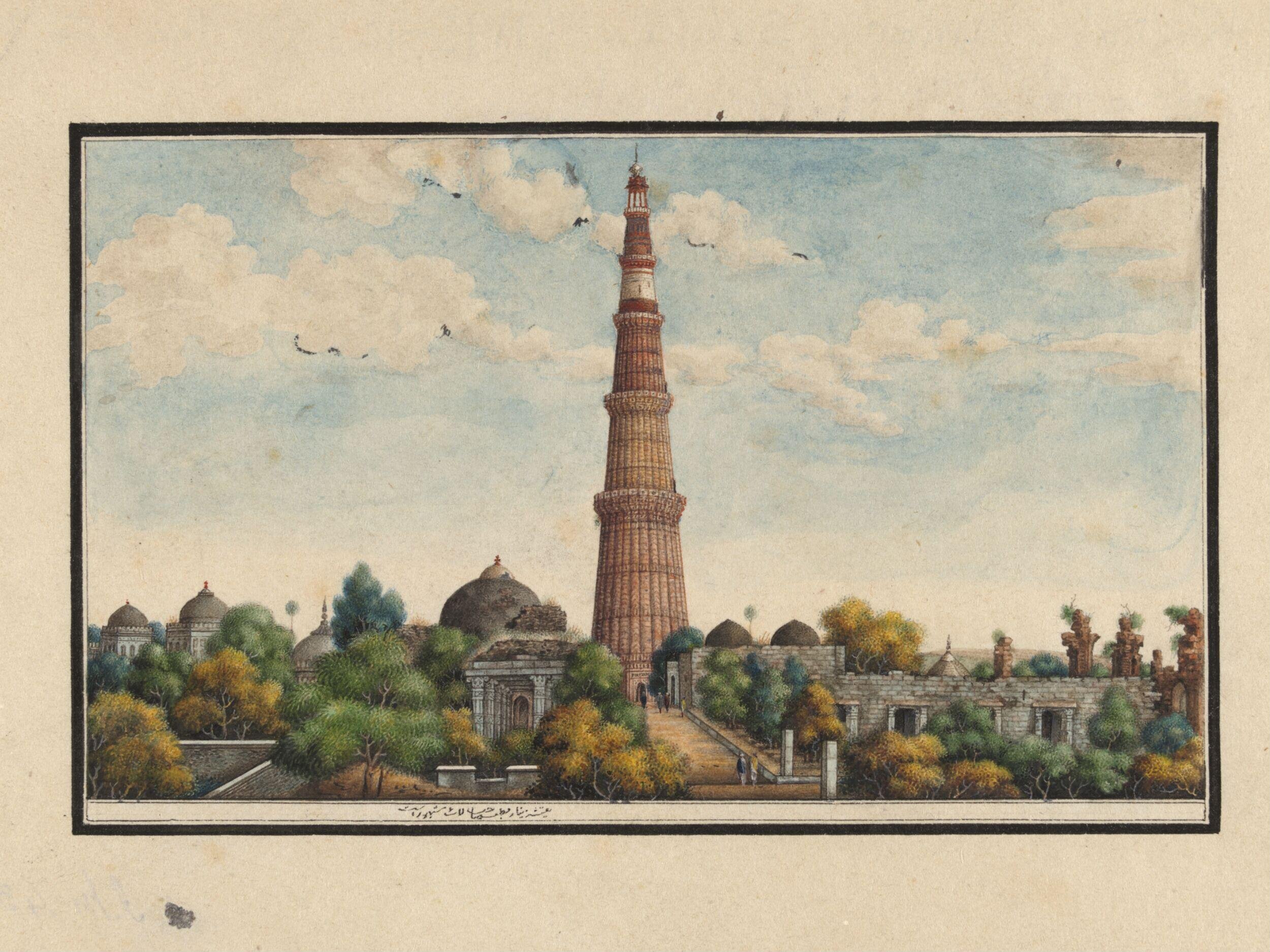
Stepping back into history, this captivating watercolor painting transports us to the heart of Mehrauli, Delhi, offering an enchanting view of the iconic Qutb Minar.
The Art and the Era;
The Artist: This stunning artwork was created by a highly skilled but unknown Indian artist belonging to the renowned Delhi School / Company School of painters.
The Date: It was painted circa 1836.
The Style: The painting is a signature example of the Company Style (or Kampani Kalam), a hybrid aesthetic that combined traditional Indian miniature precision with European perspectives and watercolor techniques.
Historic Visual Details;
Look closely at the top of the tower in this watercolor. You will see a unique wooden structure capping the minaret. This is the cupola added by Colonel Robert Smith in 1828. Because it drastically altered the historic structure, it was eventually taken down in 1848 by order of Lord Hardinge and placed on the lawns nearby, where it is still known today as "Smith's Folly". Having been painted in 1836, this rare view immortalizes that short-lived architectural modification.
Framed by lush trees, ancient domes, and crumbling ruins, this artwork captures a serene, romanticized vista of Delhi before the onset of modern urbanization.
Today, the original collection of these historical drawings is carefully preserved by institutions like the Victoria and Albert Museum in London.
Walk the Living History;
If you are interested in exploring the secrets and stunning monuments of the Qutub Minar complex firsthand, you can book an immersive heritage tour with us right now over at Project Mehrauli.