
Framing History : The Tomb of Iltutmish by William Simpson.
By Ajaz ·
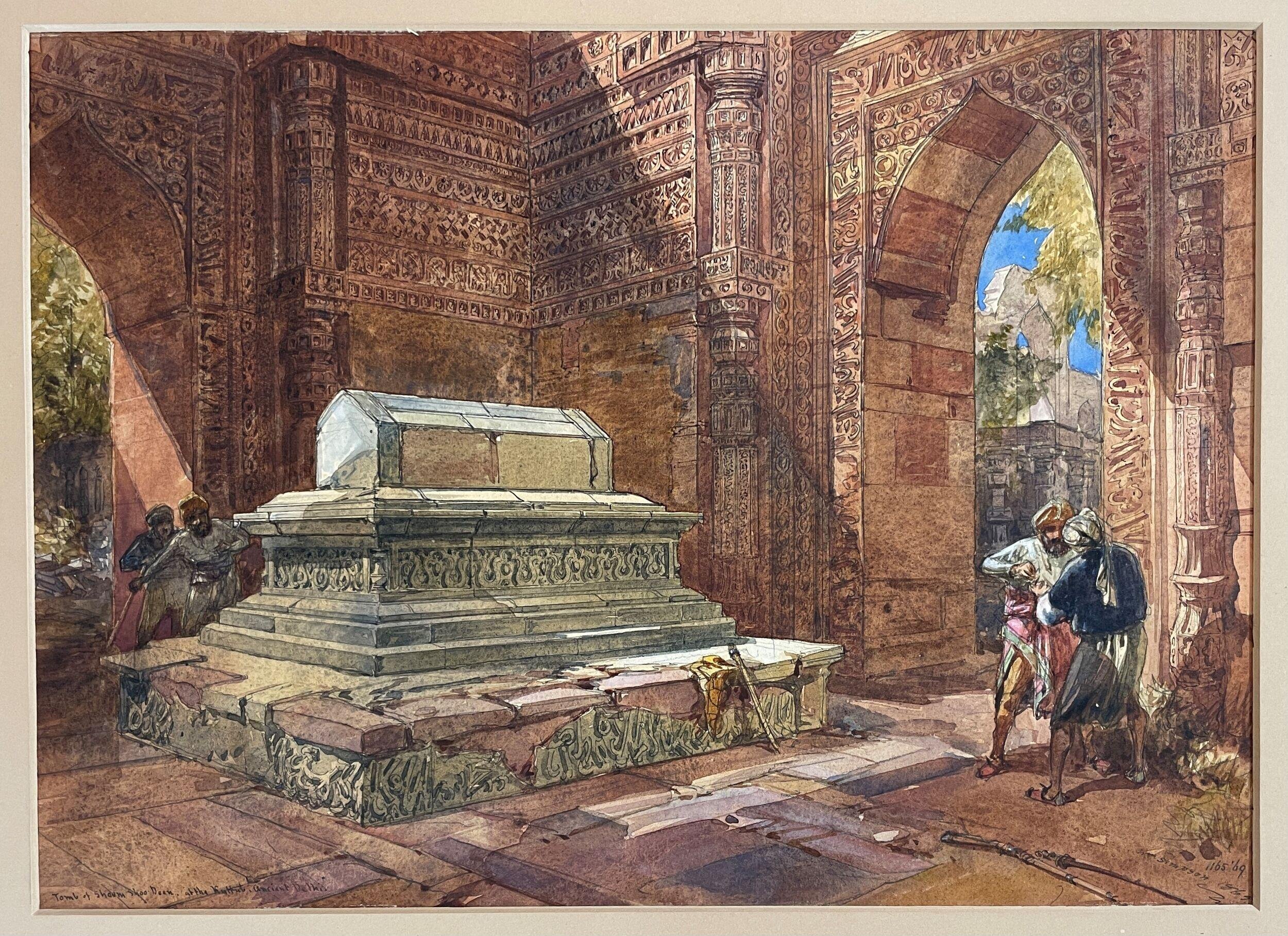
Framing History:The Tomb of Iltutmish by William Simpson.
This breathtaking pencil and watercolour painting captures the awe-inspiring interior of the Tomb of Shams ud-Din Iltutmish. Nestled inside the historic Qutub Minar Complex in Mehrauli, this masterpiece was painted by the renowned Scottish war artist and lithographer William Simpson in 1865.
Architectural Splendor in Watercolor :
Simpson arrived in Delhi in late December 1859 to document the historical landscape following the Uprising of 1857. His sketches eventually culminated in this highly detailed romantic interpretation. The painting highlights the fascinating contrast that defines the 13th-century structure:
1. The Walls: Carved out of rich red sandstone, the interior walls are intricately packed with geometric patterns, arabesques, and formal Quranic calligraphy.
2. The Sarcophagus: In stark contrast to the red sandstone walls, the central white marble cenotaph sits austerely on a plain dressed stone plinth.
3. The Open Sky: As Simpson beautifully illustrates with a brilliant patch of blue sky through the archway, the monument's original dome had long since collapsed, leaving the inner chamber open to the elements.
A Glimpse into 19th-Century Mehrauli:
Beyond the grand Indo-Islamic architecture, Simpson infuses the scene with daily life from his 19th-century travels. Armed local men carrying traditional lathis (wooden staffs) and early firearms converse by the archway, grounding this ancient royal mausoleum in a living, breathing colonial era. Today, the original painting is preserved far from Delhi, residing in the permanent collection of the Victoria and Albert Museum in London.