
Sacred Intersections: How Hindu Artistry Shaped the Quwwat-ul-Islam Mosque.
By Ajaz ·
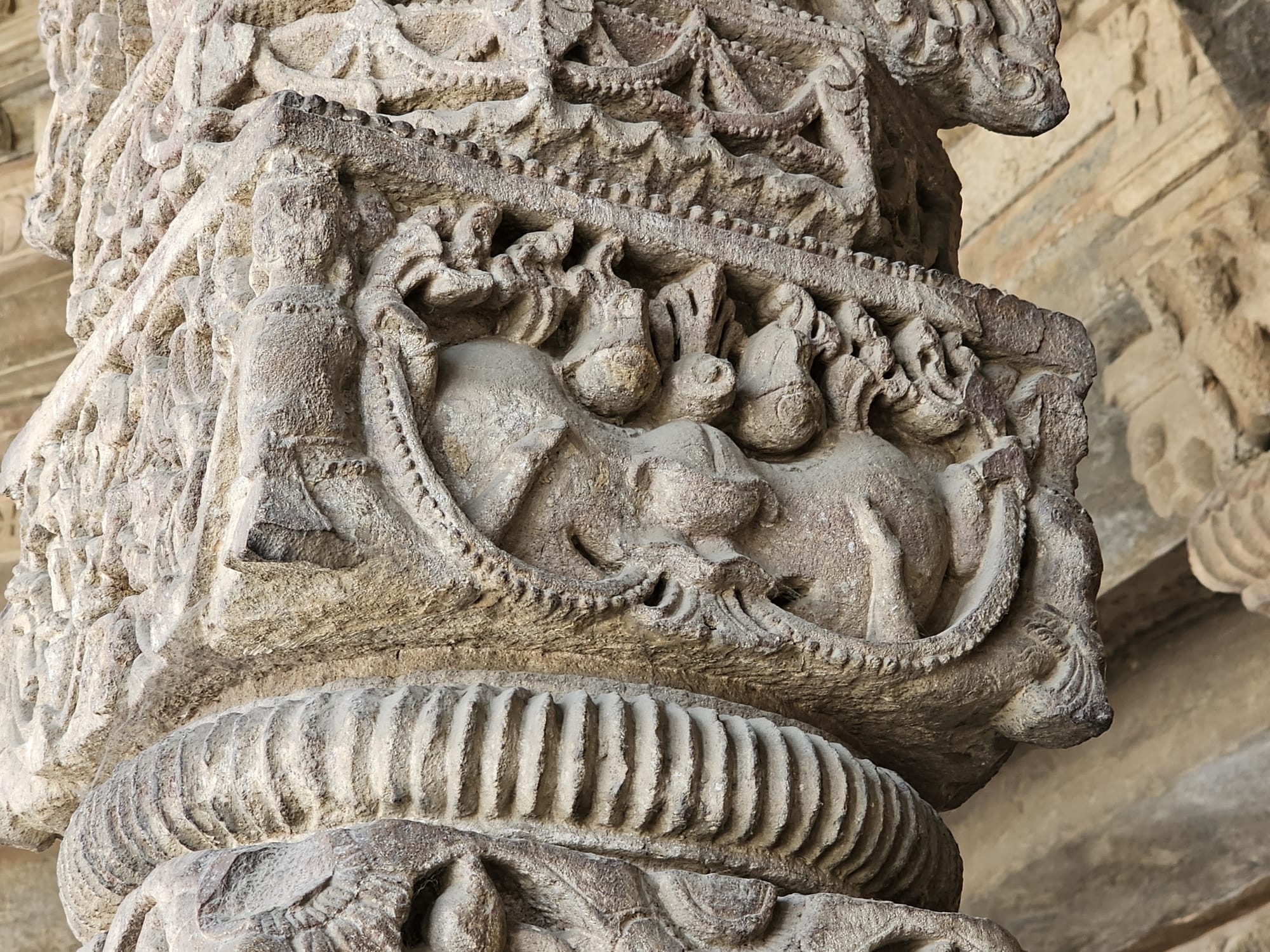
The Quwwat-ul-Islam Mosque in Delhi stands as one of the most visually striking and historically complex structures in India. Located within the UNESCO World Heritage Qutb Minar Complex, this 12th-century mosque presents a profound architectural paradox. To look closely at its stone pillars—as captured in the provided image—is to see a layered, physical record of conquest, artistic survival, and the blending of two distinct cultural worlds.
Here is the story behind the mosque and the fascinating, controversial presence of Hindu and Jain deity carvings within its walls.
📜 The Story of Construction: A Rapid Transformation
Commissioned in 1193 CE by Qutb-ud-din Aibak, the founder of the Mamluk (Slave) Dynasty, the mosque was built to mark the establishment of Ghurid rule in northern India after the defeat of Prithviraj Chauhan.
Because Aibak wanted to construct a grand congregational mosque immediately, but lacked local Islamic artisans and ready-quarried stone, builders turned to the structures immediately available. According to the historical Persian inscription over the mosque's eastern gate, materials from 27 pre-existing Hindu and Jain temples—including the prominent temple complex built by the Tomar and Chauhan Rajputs—were dismantled to build the new house of worship.
Local Hindu and Jain stone masons were employed to execute the construction. Forced to adapt to an entirely new architectural mandate, these artisans used the existing temple pillars, beams, and ceilings like a giant puzzle, stacking and arranging them to form the mosque's expansive cloistered walkways (riwaqs).
🎨 The Carvings: Deities, Idols, and Sacred Motifs
When you walk through the colonnades today, the sheer density of traditional Indian iconography is staggering. The mosque's pillars are not plain; they are a living gallery of ancient temple art.
1. Anthropomorphic Figures and Deities
Throughout the corridors, sharp-eyed visitors can spot clear depictions of figures from Hindu and Jain mythology.
• Ganesh Idols: Small carvings of Lord Ganesh, the remover of obstacles, can still be found embedded in the lower sections of certain pillars and niches.
• Tirthankaras and Puranic Figures: Traces of Jain Tirthankaras (spiritual teachers) and Hindu gods can be found standing in traditional tribhanga (tri-bent) poses within carved frames on the columns.
2. The Practice of Iconoclasm (Icon-breaking)
Because orthodox Islamic tradition strictly prohibits anthropomorphic imagery (human and animal forms) inside a mosque, many of these figures underwent intentional disfigurement during the 12th century. If you look closely at the faces of the deities and celestial dancers (apsaras) on the pillars, you will notice that many of their noses, eyes, and limbs were chipped away or plastered over to render them "formless" according to the religious requirements of the new rulers.
3. Sacred Traditional Motifs
While human faces were defaced, abstract and natural motifs were left perfectly intact. The pillars are richly decorated with symbols of abundance and divinity shared across Indian traditions:
• Purna Ghata (The Overflowing Vase): Representing prosperity and life.
• Ghatapallava (Pot and Foliage): Intricate carvings of vines emerging from sacred urns.
• The Bell-and-Chain Motif: A classic temple decoration symbolizing the ringing of sacred bells, carved with remarkable precision down the lengths of the stone shafts.
A Fused Legacy: The Birth of Indo-Islamic Art
The Quwwat-ul-Islam Mosque is not just a monument of transition; it is the birthplace of Indo-Islamic architecture.
A few years after the pillars were erected, a massive sandstone screen featuring towering pointed arches was built in front of the prayer hall. On this screen, Islamic calligraphers designed beautiful Quranic verses. However, because local Hindu artisans carved the stone, they seamlessly intertwined the rigid Arabic script with flowing, naturalistic Indian patterns like lotus buds, winding lily stalks, and looping vines.
Today, the mosque remains a powerful, tangible archive of Indian history—an architectural crossroads where the sacred artwork of ancient temples sits permanently etched into the foundations of early Islamic India.