
Canvas of the Sultanate: A Rare 19th-Century View of Alai Darwaza and Imam Zamin’s Tomb.
By Ajaz ·
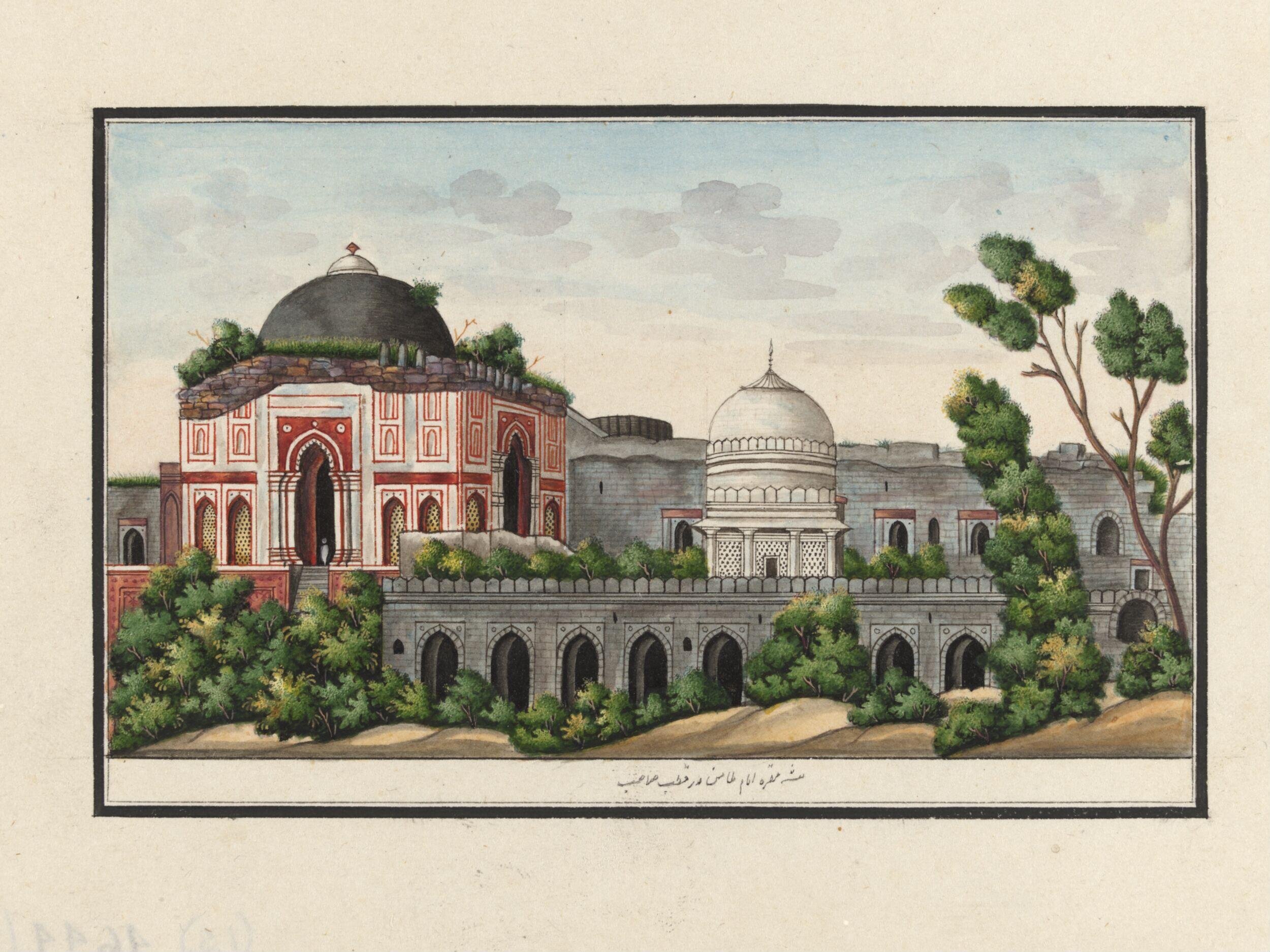
This exquisite watercolor painting, created circa 1840, is credited to the Delhi School (circle of Mazhar Ali Khan). Produced during the height of the Company Style era, it beautifully merges traditional Indian architectural precision with Western landscape perspective. Artworks of this exact series were heavily patronized by British officials, most notably appearing in the famous collections compiled by Sir Thomas Metcalfe.
The painting offers a fascinating juxtaposition of two completely different eras of Delhi's Islamic architecture side-by-side:
The Grand Gateway: Alai Darwaza (Left)
The Visionary: Commissioned in 1311 AD by the fierce Delhi Sultan Alauddin Khalji.The Architecture: It is celebrated as the first true dome built in India using scientific Islamic masonry principles. The painting beautifully captures its distinctive red sandstone structure inlaid with bands of white marble, pointed horseshoe arches, and intricately carved geometric screens.
The Quiet Sanctuary: Tomb of Imam Zamin (Right)
The Saint: This modest, elegant structure houses the remains of Muhammad Ali (popularly known as Imam Zamin), a revered Sufi saint who migrated from Turkestan to Delhi around 1500 AD during the Sikandar Lodi era.The Build: According to inscriptions, the saint built this mausoleum himself between 1537–1538 AD during the reign of Mughal Emperor Humayun, making it one of the final historical additions to the complex.
The Artistry: The painting highlights its distinctive Lodi-style architecture, featuring a white marble dome and fine sandstone jaali (lattice) work.
What Makes This Painting Special?
For heritage lovers, this 180-year-old canvas functions like a historic photograph. It shows the monuments heavily overgrown with wild greenery and dynamic landscape contours, capturing the poetic, romantic state of the ruins just before the British began colonial restoration works in the mid-19th century.
Explore the intricate carvings of the Khaljis and the serene final resting place of the Sufi saint on our next curated heritage walk with us now!